
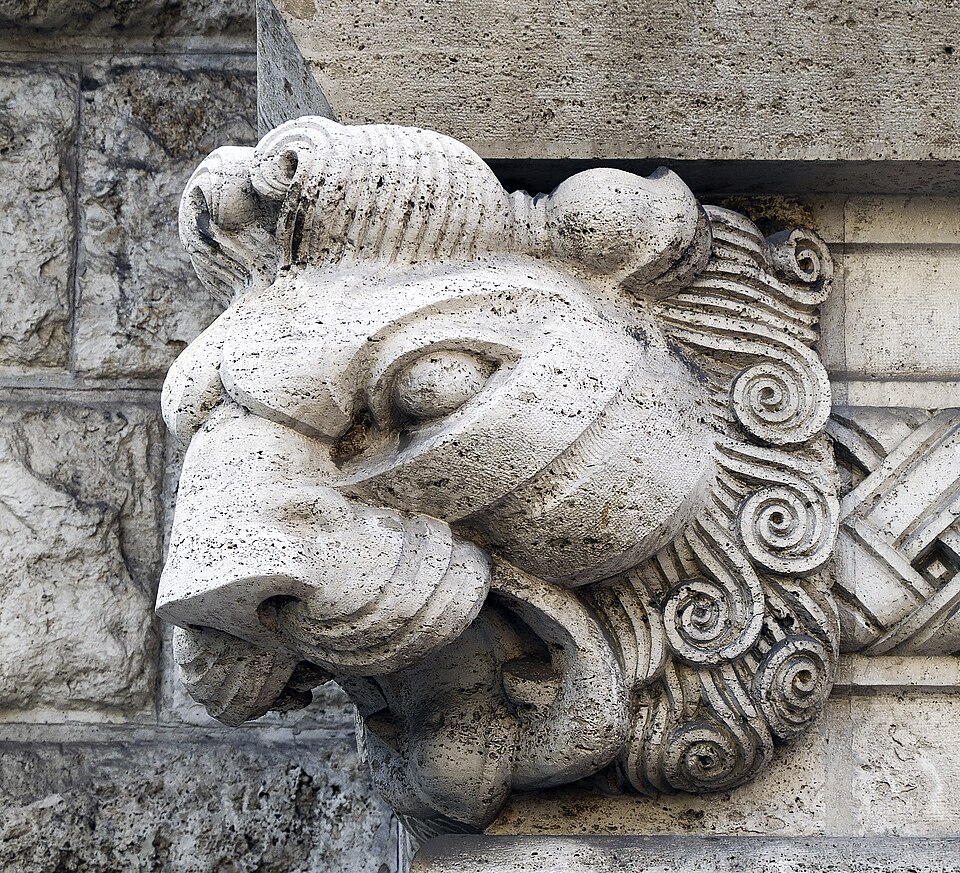
Coppedè Quarter
- old-town
- hidden-gem
- Price: Free
- Opening hours: Always open
Book a guided tour of Roma
Skip the line and see Roma with a local guide.
History
The quarter takes its name from Gino Coppedè, a Florentine architect trained as a sculptor and woodcarver before he turned to buildings, who made his name in Genoa with the flamboyant Castello Mackenzie before moving to Rome. Between 1913 and 1927 he designed the roughly forty palazzine and villini that make up this pocket of the Trieste district, treating each building as a stage set rather than a functional home, freely mixing motifs from styles that had never shared a wall before.
Coppedè never saw his district finished: he died in September 1927, with construction still underway, and his son-in-law Paolo Emilio André completed the last buildings to his plans. The result reads less like a coherent architectural movement than a single, sustained personal fantasy — Art Nouveau curves next to medieval turrets, Baroque flourishes next to motifs borrowed from ancient Egypt and Assyria — built by one architect determined to make his own private rulebook.
Did you know?
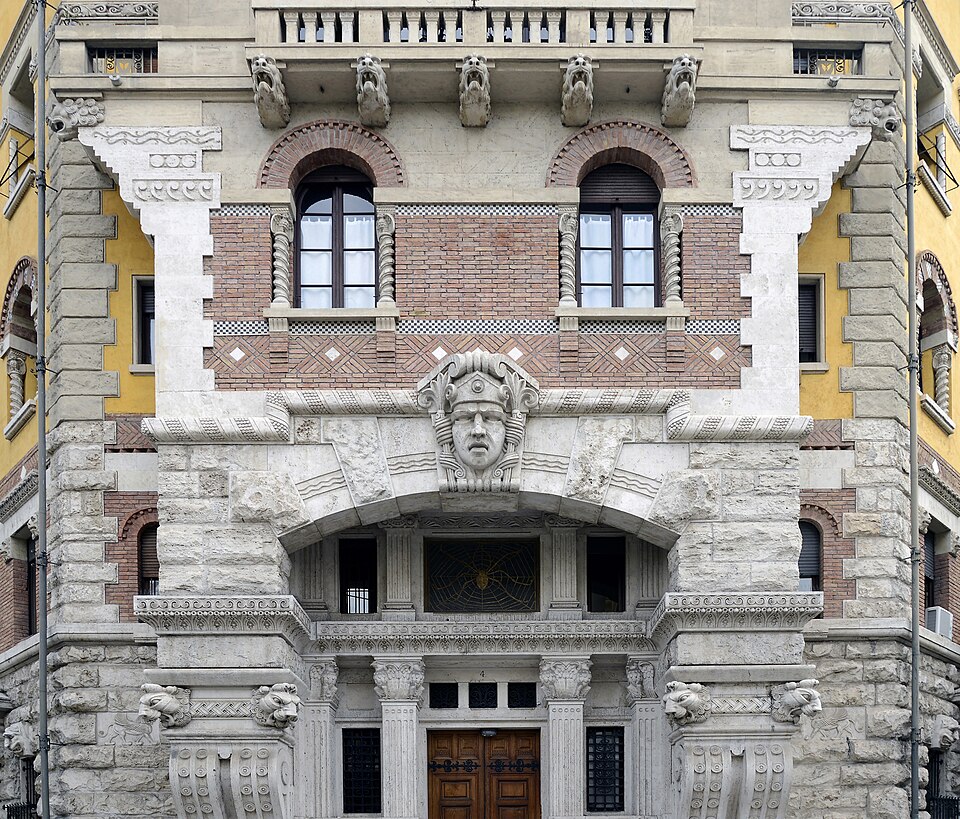
The quarter's best-known building is the Palazzo del Ragno (Spider Palace) on Piazza Mincio, named for the large gold-and-black mosaic spider suspended in its web above the main door — Coppedè's tribute, according to local tradition, to the spider's own tireless, painstaking craftsmanship, not unlike his own. At the centre of the same square sits the Fontana delle Rane, the Fountain of the Frogs, its bronze amphibians spouting water into a basin that in 1965 briefly became a swimming pool for the Beatles, who jumped in fully clothed after a night at the nearby Piper Club, then the favourite haunt of Rome's rock-and-roll crowd — including, on other nights, the Rolling Stones.
The whole neighbourhood is stitched together by a single monumental arch straddling Via Tagliamento, hung with an elaborate wrought-iron chandelier decorated with seahorses and curling tendrils that lights up after dark — walk under it and you cross, almost literally, from ordinary Rome into Coppedè's private world.
Good to know
This is a residential neighbourhood where people actually live, not an open-air museum, so the quarter rewards a quiet, unhurried visit rather than a loud one — keep voices down, especially in the courtyards, and be considerate about pointing cameras at windows. The best light for photographs is in the late afternoon, when low sun catches the reliefs and ironwork side-on, and the square is far emptier on weekdays than at weekends.
The quarter sits a little north of the historic centre, near Via Salaria; Policlinico, on Metro Line B, is the closest station, about a 15-minute walk away, or tram lines 3 and 19 stop within a few minutes' walk at Piazza Buenos Aires. It pairs naturally with a longer walk through the nearby Salario district or into Villa Ada, Rome's second-largest park, a short walk further north.