
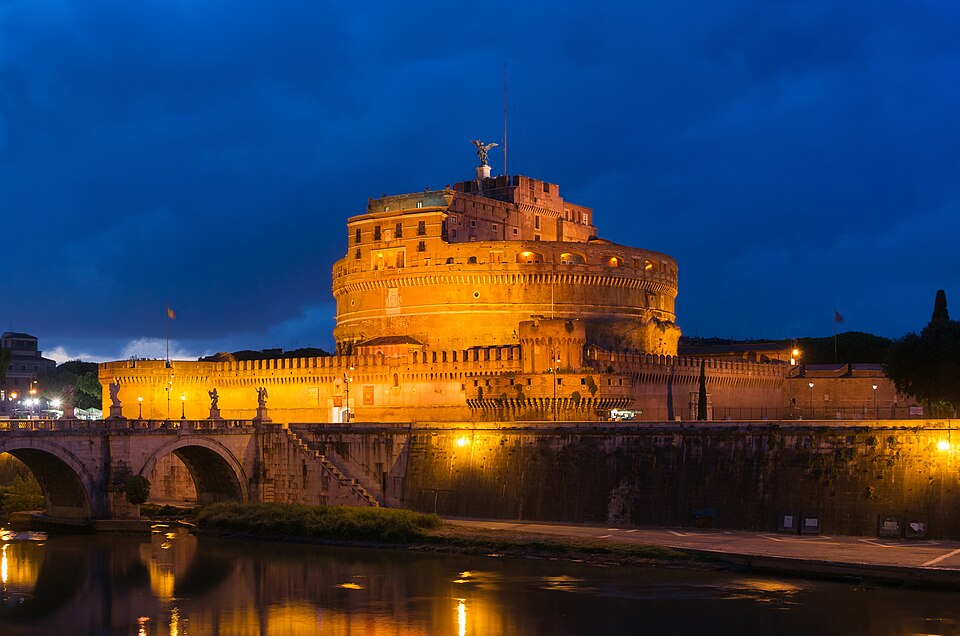
Castel Sant'Angelo
- castle
- Price: €15
- Opening hours: 09:00 - 19:30
History
Emperor Hadrian had the mausoleum built between 135 and 139 AD as a final resting place for himself and his family; he died in 138, a year before it was finished, and was among the first to be interred inside. The structure was a vast cylindrical drum, originally topped with a garden of cypresses and a colossal statue of the emperor, and it stood beside a purpose-built bridge, the Pons Aelius, which Hadrian had constructed as a grand ceremonial approach — it survives today, much altered, as the Ponte Sant'Angelo. The tomb continued to receive emperors for close to a century, the last being Caracalla in 217 AD.
By the late 3rd century the mausoleum had been folded into Rome's defensive walls and turned into a fortress, and in time it became a papal stronghold. In 1277, Pope Nicholas III had the Passetto di Borgo built, an 800-metre elevated corridor connecting the Vatican Palace directly to the fortress. It served as an escape route in moments of real danger, most famously in 1527, when Pope Clement VII fled along it during the Sack of Rome, taking refuge inside the fortress while the mutinous imperial troops of Charles V ransacked the city below.
Did you know?
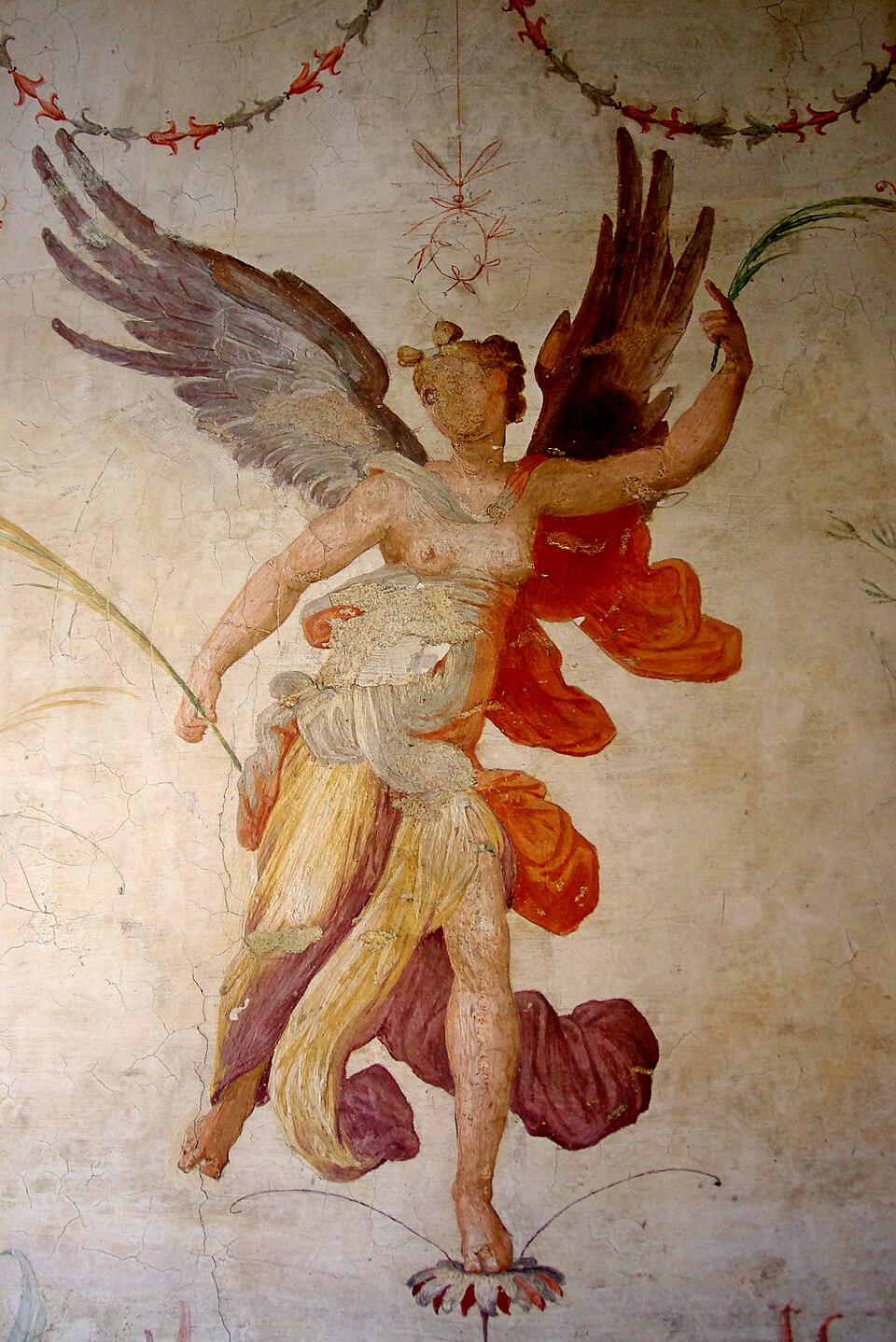
The building's current name dates to 590 AD, when Pope Gregory the Great led a procession through Rome praying for an end to a devastating plague and reportedly saw a vision of the Archangel Michael atop the mausoleum, sheathing his sword — taken as a sign the plague was finally lifting. The fortress was renamed Castel Sant'Angelo, "Castle of the Holy Angel," and some form of angel statue has crowned it ever since; the bronze figure standing there today was cast by the sculptor Peter Anton von Verschaffelt in 1753.
Inside, Pope Paul III commissioned an entire suite of Renaissance apartments, among them the Sala di Amore e Psiche, frescoed between 1545 and 1546 by Perin del Vaga and collaborators with scenes from the story of Cupid and Psyche as told in Apuleius's The Golden Ass. The fortress is also, in its own way, a pilgrimage site for opera lovers: the entire final act of Puccini's Tosca is set on its ramparts, and Puccini is said to have visited in person to note the exact pitch of the dawn bells before writing them into the score.
Good to know
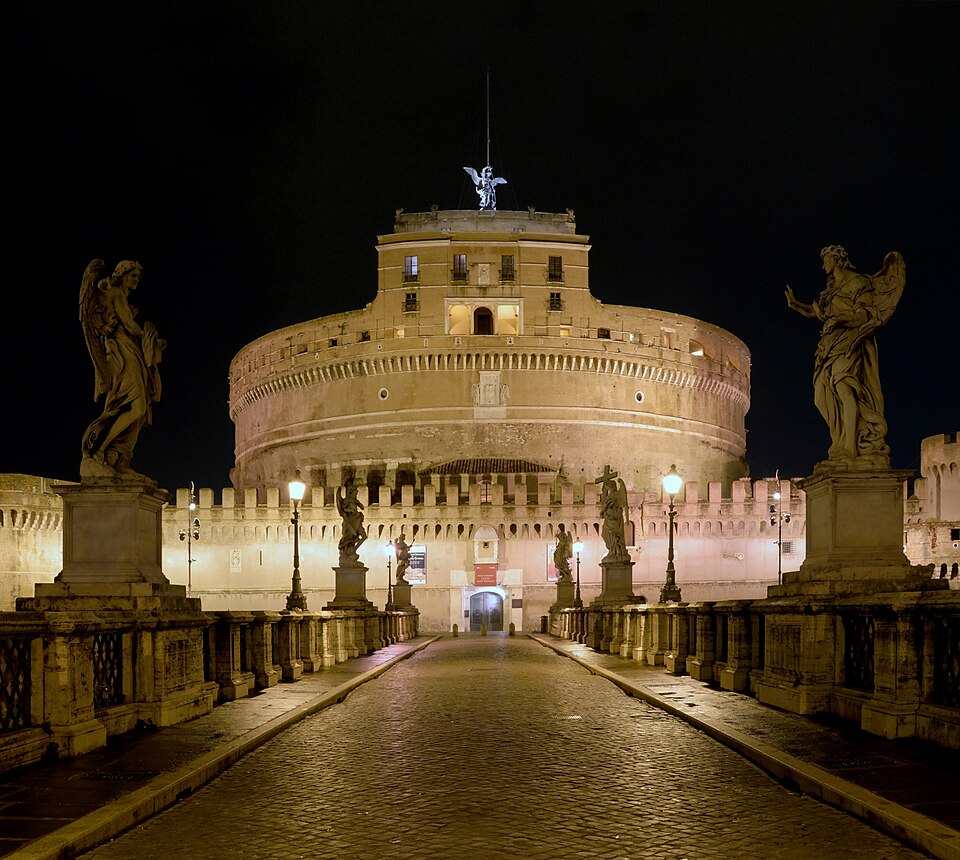
Visitors climb the same monumental spiral ramp that once carried funeral processions up into Hadrian's original 2nd-century structure — a rare chance to walk through nearly intact Roman engineering rather than just look at it. Higher up, the terraces open onto sweeping views over the Tiber and across the rooftops toward St Peter's, particularly rewarding in the late afternoon.
The walk there is part of the experience: Ponte Sant'Angelo, the pedestrian bridge leading up to the fortress, is lined with ten marble angels designed in the 1660s by Gian Lorenzo Bernini and carved by his workshop, each one carrying an instrument associated with the Passion of Christ. Two of the angels Bernini carved with his own hands were considered too beautiful to leave exposed to the weather and were moved indoors to the church of Sant'Andrea delle Fratte, so the ones on the bridge today are workshop copies — still striking, especially when floodlit after dark.