
Capitoline Museums
- art-museum
- museum
- Price: €16 - €18
- Opening hours: 09:30 - 19:30
History
In 1471, Pope Sixtus IV donated a group of ancient bronze statues then held at the Lateran to the people of Rome, including the Capitoline Wolf, the Spinario ("Boy with Thorn"), the Camillus, and fragments of a colossal statue of Domitian. Displayed publicly on the Capitoline Hill, that gift is traditionally counted as the founding act of the museums, and it's the reason they can lay claim to being the oldest public art collection in the world — the museums proper opened their doors to ordinary visitors in 1734, under Pope Clement XII, a step often cited as the birth of the modern public museum.
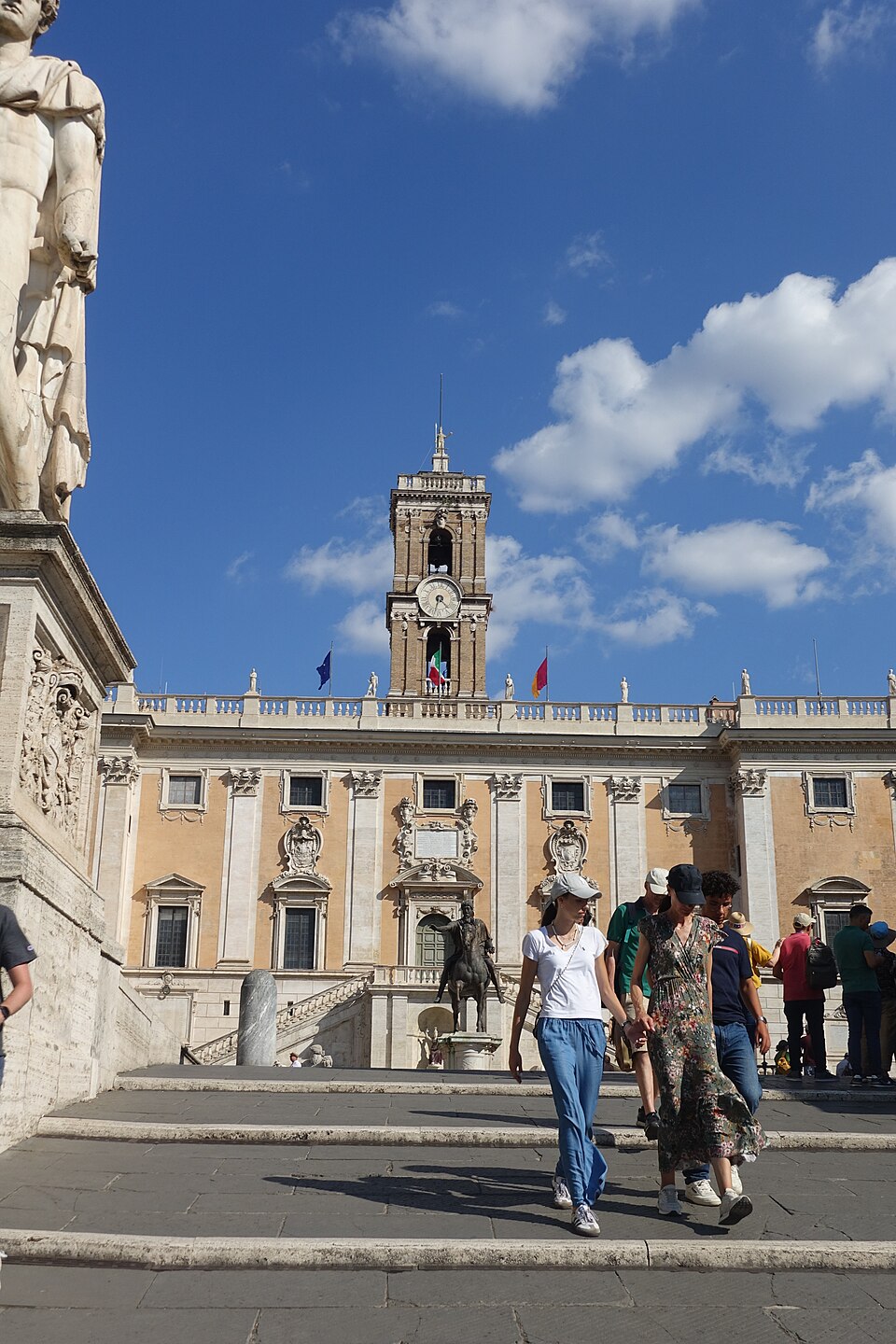
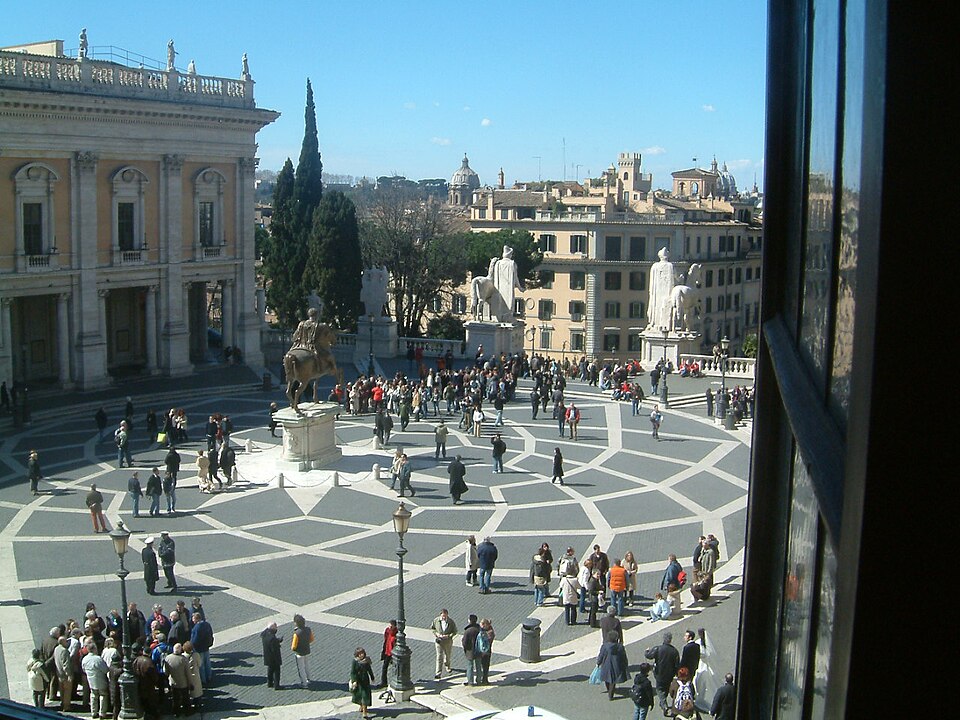
In between, Pope Paul III commissioned Michelangelo to redesign the neglected hilltop square in front, Piazza del Campidoglio. Michelangelo reoriented it to face away from the ancient Forum and toward St Peter's, redesigned the facades of the two flanking palaces — Palazzo dei Conservatori and Palazzo Nuovo — as a matching pair, and laid out an oval pavement with a radiating star pattern centred on a bronze copy of the equestrian statue of Marcus Aurelius. Work continued long after his death in 1564, and the pavement itself wasn't finally completed until the 1940s, faithfully following his original design.
Did you know?
The Capitoline Wolf, the museum's most famous bronze, was long assumed to be an Etruscan work of the 5th century BC. But radiocarbon dating of organic material trapped in its casting cores, carried out between 2012 and 2019, produced results clustering around 1021 to 1153 AD — suggesting a medieval origin instead, and directly challenging the Etruscan classification first proposed by the 18th-century art historian Johann Joachim Winckelmann. Not every scholar accepts the new dating, and the debate remains genuinely open. The suckling twins Romulus and Remus beneath the wolf, in any case, were added later still, likely in the late 15th century.
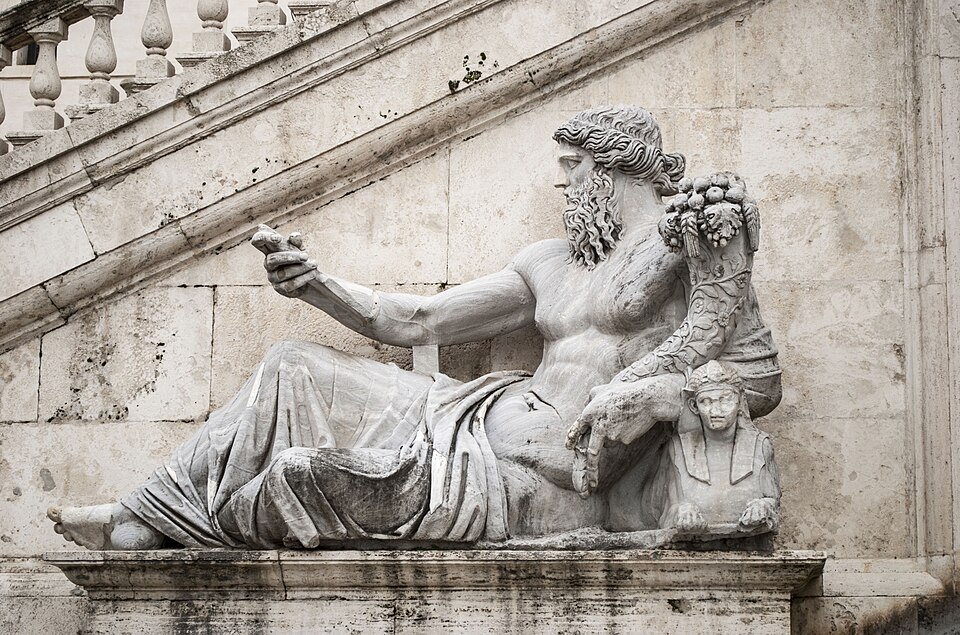
Elsewhere in the museums' courtyard reclines Marforio, a colossal 1st-century river-god statue that was, for centuries, one of Rome's celebrated "talking statues." Anonymous satirical notes were pinned to it under cover of night, often as a scripted back-and-forth with Pasquino, the most famous talking statue of all — Marforio would pose the question, and Pasquino would deliver the punchline, a running double act of popular political mockery that lasted for generations.
Good to know
The museums' two palaces, Palazzo dei Conservatori and Palazzo Nuovo, are linked by an underground passage built through the remains of the ancient Tabularium, Rome's Roman-era record office. Along the way, windows open onto one of the best-framed views of the Roman Forum anywhere in the city — an elevated, indoor vantage point most visitors never expect.
Unusually for a major Roman museum, the Capitoline Museums stay open every day of the week, closing only three days a year: 1 January, 1 May, and 25 December. Last admission is an hour before closing. It's easy to combine a visit with a walk up the gently sloping Cordonata staircase Michelangelo designed for the approach, and with the Piazza del Campidoglio itself, which is free to enter even without a museum ticket.