
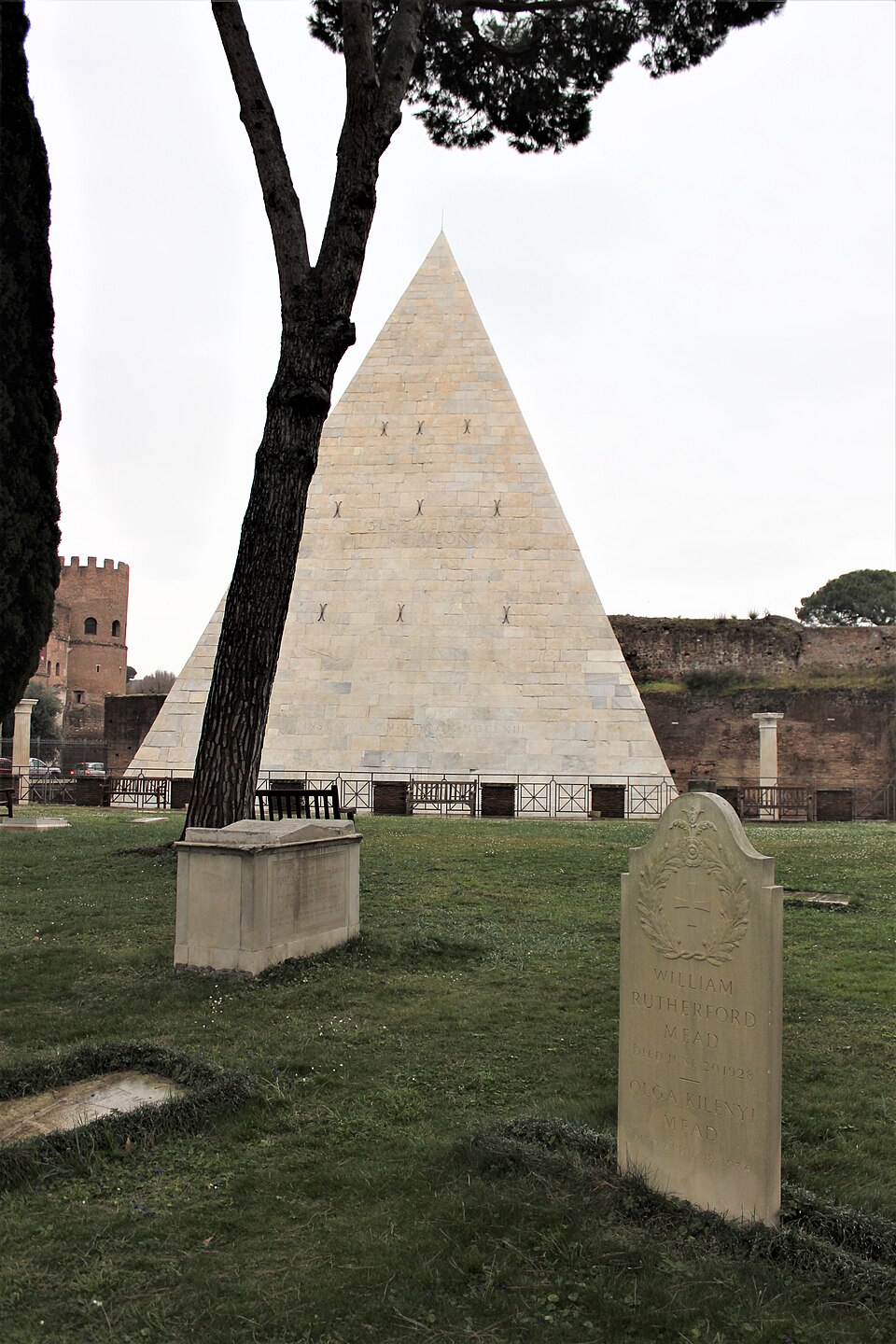
Non-Catholic Cemetery of Rome
- hidden-gem
- Price: Free (suggested donation: €3)
- Opening hours: 09:00 - 17:00 (closed Mondays)
Book a guided tour of Roma
Skip the line and see Roma with a local guide.
History
Rome's Non-Catholic Cemetery traces back to 1716, when the city's authorities first allowed non-Catholics — who were barred from burial in consecrated Catholic ground — the use of a plot of open pastureland near the Pyramid of Cestius and the Aurelian Walls. The earliest confirmed graves date from the 1730s, and burials grew steadily more frequent over the following century, as a growing number of Protestants, Orthodox Christians, Jews, Muslims and other non-Catholics — many of them young travellers who died in Rome on the Grand Tour — needed somewhere to be laid to rest.
By the 19th century, the cemetery had become an essential stop for the international community living in or passing through Rome, and today it holds the graves of several thousand people from more than 60 countries, alongside memorials to writers, diplomats, artists and Communists whose 20th-century burials sit only a short walk from the earliest 18th-century headstones.
Did you know?
The cemetery's most visited grave belongs to the poet John Keats, who died of tuberculosis in Rome in 1821, aged just 25. At his own request, his headstone doesn't carry his name at all, only the epitaph he dictated on his deathbed, embittered by poor reviews of his work: "Here lies One whose Name was writ in Water." Nearby lies a memorial to Percy Bysshe Shelley, drowned off the Italian coast the following year; his ashes were buried here after his cremation on the beach at Viareggio, though Shelley's heart, famously said to have survived the flames intact, ended up buried not in Rome but with his son in England.
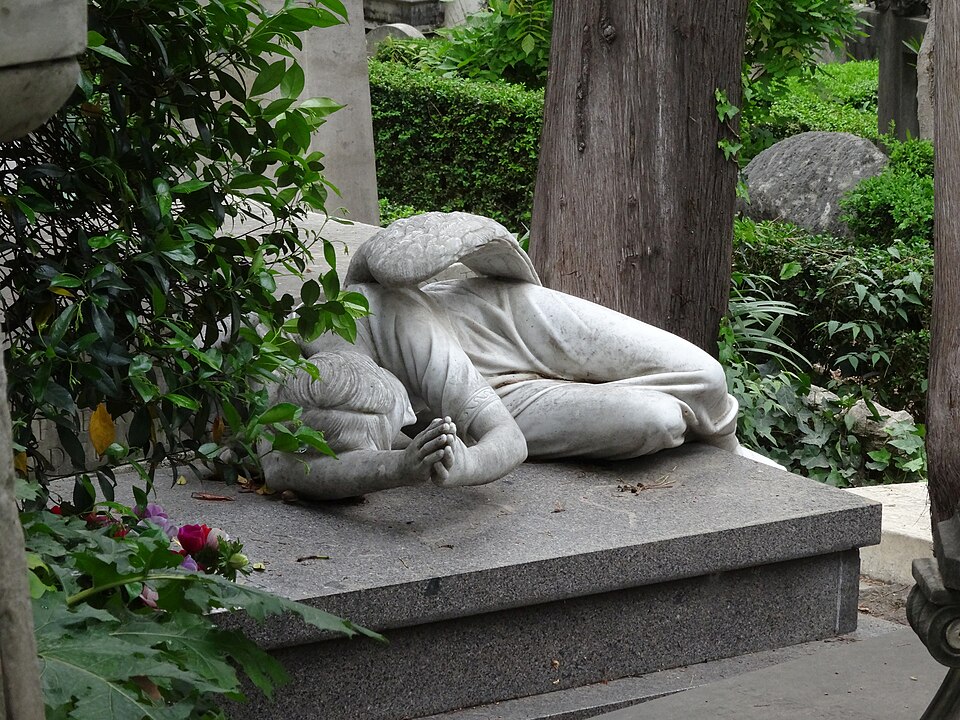
Wander the paths and you'll likely be joined by some of the cemetery's other permanent residents: a colony of cats that has lived among the graves since at least the mid-19th century, now cared for by a dedicated volunteer group, Gatti della Piramide, funded largely by visitor donations. Elsewhere in the grounds stands the Angel of Grief, a marble sculpture the American artist William Wetmore Story carved in 1894 for his own wife's tomb — its image of an angel collapsed in mourning has since been copied on memorials around the world, from university campuses to countless other cemeteries.
Good to know
The cemetery is open every day except Monday, and there's no admission fee — only a suggested donation of around €3, which goes directly toward maintaining the grounds and its historic monuments. This remains an active burial ground, not a tourist attraction dressed up as one, so visitors are asked to keep their voices down, dress respectfully, and be mindful of mourners who may be visiting a genuinely recent grave.
The cemetery sits directly beside the Pyramid of Cestius, the pointed marble tomb of a Roman magistrate that now doubles as the graveyard's most striking backdrop, and just a short walk from Porta San Paolo, a well-preserved gate in Rome's ancient Aurelian Walls — both worth combining into the same visit. The Piramide stop on Metro Line B sits right outside, making this one of the easiest hidden gems in Rome to reach.