
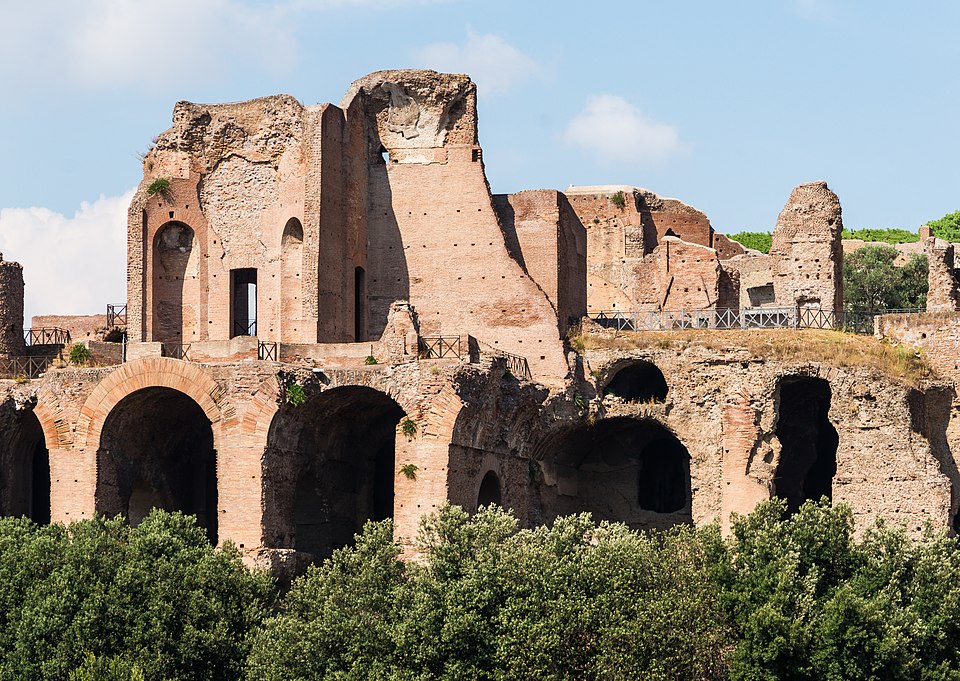
Palatine Hill
- ruins
- Price: €16 - €22 (combined ticket with Colosseum and Roman Forum)
- Opening hours: 08:30 - 19:00
History
Tradition holds that Rome was founded right here, on the Palatine, on 21 April 753 BC, when Romulus — after killing his twin brother Remus in a dispute over which hill should host the new city — ploughed the sacred boundary (pomerium) around its summit. It's legend, not verifiable history, but it shows the Romans themselves considered the Palatine the birthplace of their city: every version of the founding myth, from Livy's account to the she-wolf suckling the twins in the nearby Lupercal cave, is anchored to this specific hill.
Whatever the truth of Romulus, the hill's real transformation began with Augustus, who built his house here to align himself with the mythical founder, and reached its most spectacular scale under Domitian at the end of the 1st century AD. His architect, Rabirius, raised two vast connected complexes: the Domus Flavia, for state ceremonies and audiences, and the Domus Augustana, the emperor's private residence, complete with a sunken garden shaped like a miniature stadium. Because emperors kept living and ruling from here for centuries, the hill's Latin name, Palatium, passed directly into English, Italian, French and Spanish as the word for "palace."
Did you know?
In the 1940s, archaeologists excavating the southwest corner of the hill uncovered a row of postholes cut straight into the bedrock — the foundations of Iron Age wattle-and-daub huts dating to the 9th-8th century BC, right around the traditional founding date. Ancient Romans already knew about a hut-shaped shrine on this spot, which they called the "Casa Romuli" and carefully maintained and rebuilt for centuries as a sacred relic of their founder. It's one of the rare cases where archaeology and legend point to exactly the same patch of ground, even if no one can prove Romulus himself ever lived there.
Centuries later, in 1550, Cardinal Alessandro Farnese bought up part of the ruined imperial palace on the northern slope and had it turned into a lavish terraced garden, designed by the architect Vignola. The Orti Farnesiani are generally considered the first private botanical garden in Europe, built directly over the vaulted substructures of the emperors' palaces — a Renaissance pleasure garden literally growing out of antiquity.
Good to know
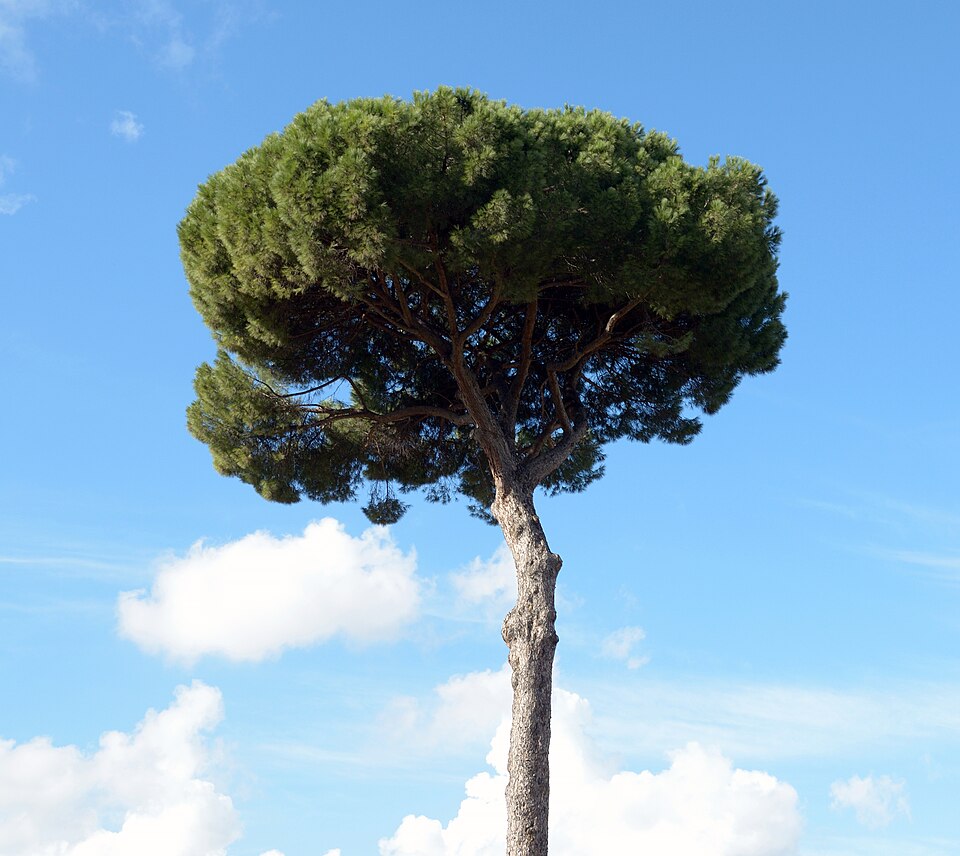
The Palatine is included on the same combined ticket as the Colosseum and Roman Forum, valid 24 hours from first entry, so you don't need to see all three sites on the same day. Despite sharing a ticket with Rome's most visited monument, the Palatine is noticeably calmer — most visitors stop at the Forum and never climb the extra steps up the hill, so this is often the most peaceful stretch of a very busy combined visit. Its umbrella pines also give some of the best natural shade in central Rome, a real advantage on a hot summer afternoon.
Save time and energy for the western edge of the hill, where the ruins of the Domus Augustana open onto uninterrupted views down over the Circus Maximus on one side and the Roman Forum on the other — arguably the best free viewpoint included in the ticket. The terrain is uneven archaeological ground with few railings, so wear comfortable shoes. A practical trick many visitors miss: entering the combined site through the Roman Forum or Palatine Hill entrances, rather than the Colosseum, usually means shorter queues, since most tour groups funnel through the Colosseum gate first.